
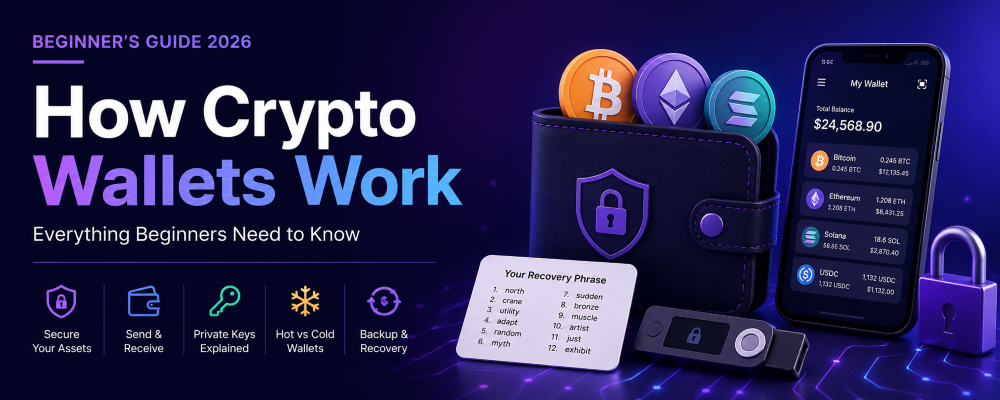
Crypto wallets – One of the biggest misconceptions about cryptocurrency is that your coins are actually stored inside your wallet. In reality, that’s not how blockchain technology works.
Understanding crypto wallets is one of the most important first steps for anyone entering the world of Web3. Whether you’re exploring Bitcoin, Ethereum, Solana, or any other blockchain, knowing how wallets function will help you manage your digital assets more confidently and securely.
Let’s break it down.
What Is a Crypto Wallet?
A cryptocurrency wallet is a tool that allows you to access, send, receive, and manage digital assets stored on a blockchain.
Instead of storing your coins, a wallet stores the private keys that prove you own them.
Think of it like this:
- The blockchain is a global digital ledger.
- Your wallet is the key that unlocks your portion of that ledger.
- Your coins never leave the blockchain—they remain recorded there at all times.
Public Key vs Private Key
Every wallet contains two important pieces of information.
Public Key
Your public key is similar to a bank account number.
You can safely share it with others so they can send cryptocurrency to you.
Private Key
Your private key is like the password to your bank account.
Anyone who has your private key has complete control over your funds.
This is why you should never share your private key or seed phrase with anyone.
What Is a Seed Phrase?
When creating a wallet, you’ll receive a recovery phrase—usually 12 or 24 random words.
This seed phrase is the master backup of your wallet.
If your device is lost or damaged, the seed phrase allows you to restore access to your funds.
Store it offline in a secure location. Never save it in cloud storage or send it through email or messaging apps.
Types of Crypto Wallets
Hot Wallets
Hot wallets are connected to the internet.
Examples include:
- Phantom
- MetaMask
- Trust Wallet
- Coinbase Wallet
Advantages:
- Easy to use
- Great for beginners
- Fast transactions
- Ideal for everyday activity
Disadvantages:
- More exposed to online threats
- Requires good security habits
Cold Wallets
Cold wallets keep your private keys offline.
Popular examples include hardware wallets.
Advantages:
- Maximum security
- Ideal for long-term storage
- Protected from most online attacks
Disadvantages:
- Less convenient for daily transactions
- Physical device required
How Transactions Work
When you send cryptocurrency:
- Your wallet signs the transaction using your private key.
- The blockchain verifies the signature.
- Validators confirm the transaction.
- Ownership updates on the blockchain.
- The recipient sees the funds in their wallet.
Your wallet simply authorizes the movement—it does not physically send coins from one device to another.
Keeping Your Wallet Safe
Follow these essential security practices:
- Never share your seed phrase.
- Use strong passwords.
- Enable biometric authentication when available.
- Download wallets only from official sources.
- Beware of phishing websites and fake apps.
- Double-check wallet addresses before sending funds.
- Keep software up to date.
Why Wallets Matter in Web3
Crypto wallets are becoming much more than tools for holding digital assets.
They are evolving into digital identities that allow users to:
- Own digital collectibles
- Participate in decentralized applications (dApps)
- Vote in community governance
- Access blockchain games
- Manage NFTs
- Interact with Web3 services
As blockchain adoption grows, wallets are expected to become an everyday part of the internet experience.
Final Thoughts
A crypto wallet is your gateway to the blockchain. Understanding how it works is essential for safely participating in the world of cryptocurrency and Web3.
Whether you choose a hot wallet for convenience or a cold wallet for maximum security, the most important rule remains the same:
Protect your private keys, safeguard your recovery phrase, and stay informed.
The future of digital ownership starts with understanding your wallet.